|
Reviewed by Gavin Moreland, MD
|
Updated Sep 15, 2026 · 11 min read
Leafwell’s licensed providers help PTSD patients explore medical cannabis as a supervised treatment option — online, same day, in most states.
- ✓PTSD is a named qualifying condition in 33 states — one of the most widely accepted conditions in the country
- ✓Where it isn’t listed, providers in California, D.C., Maine, Massachusetts, New York, Oklahoma, and Virginia may certify it at their discretion
- ✓Physician-supervised, lab-tested, state-regulated products

PTSD qualifies by name in 33 states — and providers can certify it in most of the rest. Get your recommendation today.
Key takeaways
- PTSD is a named qualifying condition in 33 states, plus Puerto Rico, Guam, the US Virgin Islands, and the Northern Mariana Islands
- Some states add requirements: Missouri requires a psychiatrist’s diagnosis; Utah and Vermont require concurrent mental-health treatment; Arizona requires ongoing conventional PTSD treatment
- In the seven no-list or catch-all jurisdictions, a licensed provider may certify PTSD at their discretion; Nevada and Alaska are the only true gaps
- Low-dose THC may suppress trauma-related nightmares by reducing REM sleep; high doses can worsen anxiety — the dose window is narrower in PTSD than in most conditions
- CBD acts on serotonin 5-HT1A receptors — the same target as SSRIs — and may reduce hyperarousal without intoxication

50%
reduced use of benzodiazepines
36%
reduction in PTSD-related urgent care visits

27%
improvement in symptom severity
Understanding PTSD and its impact
Post-traumatic stress disorder affects an estimated 13 million Americans in any given year — roughly 3.5–5% of the adult population. It develops after experiencing or witnessing trauma and shows up in four symptom clusters: re-experiencing (flashbacks, nightmares), avoidance, negative changes in mood and thinking, and hyperarousal. Women are roughly twice as likely as men to develop PTSD after trauma, and prevalence among military veterans runs far higher — an estimated 11–30% depending on service era.
PTSD is not just psychological — it involves measurable changes in the brain’s fear-processing circuits: an overactive amygdala, reduced regulation from the prefrontal cortex, and disrupted hippocampal function. First-line treatment is trauma-focused psychotherapy (EMDR, cognitive processing therapy, prolonged exposure), often combined with SSRIs — but treatment responses vary widely.
When PTSD continues despite treatment
Only two medications — sertraline and paroxetine — are FDA-approved for PTSD, and response rates are modest. Nightmares and sleep disruption in particular often persist even when daytime symptoms improve. When symptoms continue despite conventional treatment, patients and providers may discuss additional approaches. Medical cannabis enters these conversations not as a replacement for trauma-focused therapy but as a potential adjunct within a supervised medical framework.
Worth knowing: the VA/DoD clinical practice guideline does not currently recommend cannabis for PTSD, citing limited large-trial evidence and an elevated risk of cannabis use disorder in PTSD populations — which is exactly why physician supervision, low starting doses, and ongoing monitoring matter for patients who choose this route.
How cannabis may help PTSD
People with PTSD show altered endocannabinoid signaling: PET imaging research found elevated CB1 receptor availability consistent with depleted anandamide, the body’s own cannabinoid. [3] The two primary cannabis compounds interact with this system differently:
- THC (Tetrahydrocannabinol): Low doses may suppress trauma-related nightmares by reducing REM sleep — a randomized controlled trial of nabilone (a synthetic THC analogue) in military personnel found significant reductions in nightmare intensity and frequency. [1] Neuroimaging also suggests low-dose THC supports fear-extinction learning — the process trauma therapy relies on. [4] High doses can do the opposite: trigger anxiety, paranoia, or dissociation.
- CBD (Cannabidiol): A non-intoxicating compound that activates serotonin 5-HT1A receptors — the same receptor family targeted by SSRIs — and may lower baseline hyperarousal. Preclinical evidence suggests CBD also supports fear-memory extinction by raising anandamide levels.
Observational data point the same direction: a prospective study of 404 patients found PTSD symptoms reduced by more than 50% immediately after cannabis use, [2] while an FDA-regulated trial in veterans found mixed results across preparations. [5] The consistent theme: dose matters more in PTSD than in almost any other condition, which is why medical guidance on cannabinoid ratio and titration is essential.
Cannabis — particularly CBD — is metabolised by the cytochrome P450 enzyme system and can raise blood levels of SSRIs and SNRIs. Combining THC with benzodiazepines can amplify sedative effects, and cannabis may add to the blood-pressure-lowering effect of prazosin, a medication commonly prescribed for PTSD nightmares. Always disclose all medications at your Leafwell appointment.
PTSD may qualify you for a medical cannabis card.
See if you qualify in your state — most approvals completed same day.
- ✓Get approved in minutes
- ✓Same-day appointments available
- ✓Money back guarantee
Choosing cannabis products for PTSD
Rather than strain names, what matters clinically is cannabinoid ratio, delivery method, and timing — matched to your dominant symptom cluster.
- Nightmares and sleep disruption: A low-to-moderate THC product 30–60 minutes before bed — sublingual tincture for sleep onset, capsule or edible (6–8 hr duration) for staying asleep. Balanced 1:1 or 2:1 THC:CBD ratios help blunt THC’s anxiety potential.
- Daytime anxiety and hyperarousal: CBD-dominant products preserve function without impairment — sublingual CBD (onset 15–30 min) for acute episodes, oral CBD (onset 30–60 min, duration 4–6 hrs) for a sustained baseline.
- Delivery methods: Sublingual tincture (onset 15–30 min, 4–6 hrs) is the best all-rounder; oral capsules/edibles (onset 30–90 min, 6–8 hrs) suit overnight coverage; vaporization (onset 1–5 min, 2–3 hrs) suits acute hyperarousal but is the easiest to overuse.
- Dosing principles: Establish a CBD baseline (10–25 mg daily) before adding THC; start THC at 2.5 mg and hold each dose for at least three nights; avoid very high-THC products — the dose-response curve in PTSD is steep.
Because cannabis use disorder risk is elevated in PTSD populations, providers also monitor for tolerance and escalating use. Individualized medical guidance — not trial and error — is the recommended way to start.
PTSD and medical marijuana eligibility by state
PTSD is one of the most widely accepted qualifying conditions in the country — 33 states list it by name, along with Puerto Rico, Guam, the US Virgin Islands, and the Northern Mariana Islands. In the seven jurisdictions with no fixed list or a provider catch-all (California, Washington D.C., Maine, Massachusetts, New York, Oklahoma, Virginia), a licensed provider may certify PTSD at their discretion. The notable exceptions: Nevada’s statute does not name PTSD (though “an anxiety disorder” is listed), and Alaska has no practical route.
| State | PTSD qualifying? | How to qualify |
|---|---|---|
| Alabama | Yes — listed directly | PTSD is an approved condition (documented failure of conventional treatment required; restricted product forms) |
| Alaska | No | PTSD is not listed and produces none of the five listed symptoms — no practical route |
| Arizona | Yes — listed directly | Approved; requires attestation that you are undergoing conventional PTSD treatment |
| Arkansas | Yes — listed directly | PTSD is an approved condition |
| California | At provider’s discretion | Physician may certify any condition cannabis provides relief for |
| Colorado | Yes — listed directly | PTSD is an approved condition |
| Connecticut | Yes — listed directly | PTSD has been an approved condition since 2012 |
| Delaware | Yes — listed directly | PTSD is an approved condition (patients 65+ may self-certify) |
| Florida | Yes — listed directly | PTSD is an approved condition |
| Georgia | Yes — listed directly | PTSD from direct exposure to or witnessing trauma; patients 18+ (product-form-limited program) |
| Guam | Yes — listed directly | PTSD is an approved condition under the territory’s program |
| Hawaii | Yes — listed directly | PTSD is an approved condition |
| Illinois | Yes — listed directly | PTSD is an approved condition |
| Iowa | Yes — listed directly | PTSD is approved (limited-THC program: 4.5g per 90 days) |
| Kentucky | Yes — listed directly | PTSD is named in the program statute |
| Louisiana | Yes — listed directly | PTSD is an approved condition |
| Maine | At provider’s discretion | No fixed list; provider certifies likely therapeutic or palliative benefit |
| Maryland | Yes — listed directly | PTSD is an approved condition |
| Massachusetts | Not directly | Via the catch-all — “other debilitating conditions” as determined in writing by the provider |
| Michigan | Yes — listed directly | PTSD is an approved condition |
| Minnesota | Yes — listed directly | PTSD is an approved condition |
| Mississippi | Yes — listed directly | PTSD is an approved condition |
| Missouri | Yes — listed directly | Debilitating psychiatric disorders incl. PTSD — requires diagnosis by a state-licensed psychiatrist |
| Montana | Yes — listed directly | PTSD is an approved condition |
| Nevada | Not directly | PTSD is not in the statute; a provider may consider it under “an anxiety disorder” (listed) |
| New Hampshire | Yes — listed directly | Moderate or severe PTSD is a stand-alone qualifying condition (in-person exam required) |
| New Jersey | Yes — listed directly | PTSD is an approved condition (bona fide provider relationship required) |
| New Mexico | Yes — listed directly | PTSD is an approved condition |
| New York | At provider’s discretion | Provider may certify any condition deemed suitable |
| North Dakota | Yes — listed directly | PTSD is an approved condition |
| Northern Mariana Islands | Yes — listed directly | PTSD is an approved condition under the territory’s program |
| Ohio | Yes — listed directly | PTSD is an approved condition |
| Oklahoma | At provider’s discretion | No fixed list; physician certifies |
| Oregon | Yes — listed directly | PTSD is an approved condition |
| Pennsylvania | Yes — listed directly | PTSD is an approved condition |
| Puerto Rico | Yes — listed directly | PTSD is on the Department of Health condition list |
| Rhode Island | Yes — listed directly | PTSD is an approved condition |
| South Dakota | Yes — listed directly | PTSD is an approved condition — 13.7% of program patients qualify through it |
| Texas | Yes — listed directly | Approved under the Compassionate Use Program (low-THC, prescription-based) |
| US Virgin Islands | Yes — listed directly | PTSD is an approved condition under the territory’s program |
| Utah | Yes — listed directly | Approved; requires concurrent treatment by a mental health provider |
| Vermont | Yes — listed directly | Approved with severe, persistent symptoms; requires ongoing psychotherapy and a 3-month provider relationship |
| Virginia | At provider’s discretion | Practitioner may certify any diagnosed condition |
| Washington | Yes — listed directly | Approved (symptoms must significantly interfere with activities of daily living) |
| Washington D.C. | At provider’s discretion | No fixed list; adults 21+ may self-certify |
| West Virginia | Yes — listed directly | PTSD is an approved condition |
Note: Qualifying conditions change; confirm current rules during your Leafwell evaluation. States without active medical programs (Idaho, Indiana, Kansas, North Carolina, South Carolina, Tennessee, Wisconsin, Wyoming; Nebraska’s program is still being implemented) are not listed.
How patients with PTSD access medical cannabis
- Medical evaluation — A licensed provider reviews your PTSD diagnosis, symptom history, and current medications to determine if medical cannabis is appropriate. For veterans, a VA PTSD diagnosis serves as valid supporting documentation.
- Certification if appropriate — If the provider determines cannabis may be beneficial, they issue certification under your state’s medical marijuana program.
- State registration — Patients complete registration with their state’s health department to obtain the medical marijuana ID card.
- Access regulated products — Once approved, patients purchase lab-tested cannabis from licensed dispensaries with clearly labeled THC and CBD levels.
PTSD may qualify you for a medical cannabis card.
Living with PTSD? Get your medical cannabis card online in minutes — with larger purchase limits and up to 40% in tax savings.
- ✓Get approved in minutes
- ✓Same-day appointments available
- ✓Money back guarantee
Medical cannabis helped Jorge make space to heal.
After trauma, everyday emotions felt impossible to sit with — until Jorge added medical cannabis to his care plan.
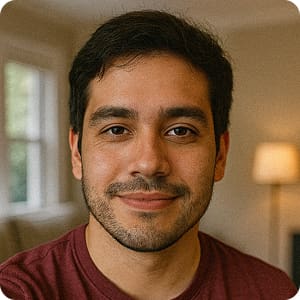
“Cannabis helps me explore the emotions I can’t sit with on a daily basis. It’s been the most powerful part of my healing journey.”
Jorge, Leafwell patient *name and photo changed for privacy
A cannabis care plan, tailored to your needs
We’ve made it simple to get personalized guidance from a cannabis-knowledgeable pharmacist — no medical card required.
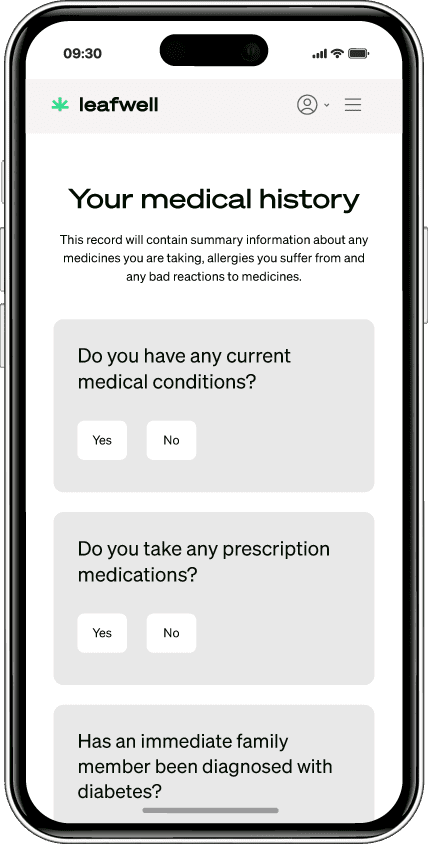
Complete a short questionnaire
Tell us about your medical history and PTSD symptoms — takes under 5 minutes.
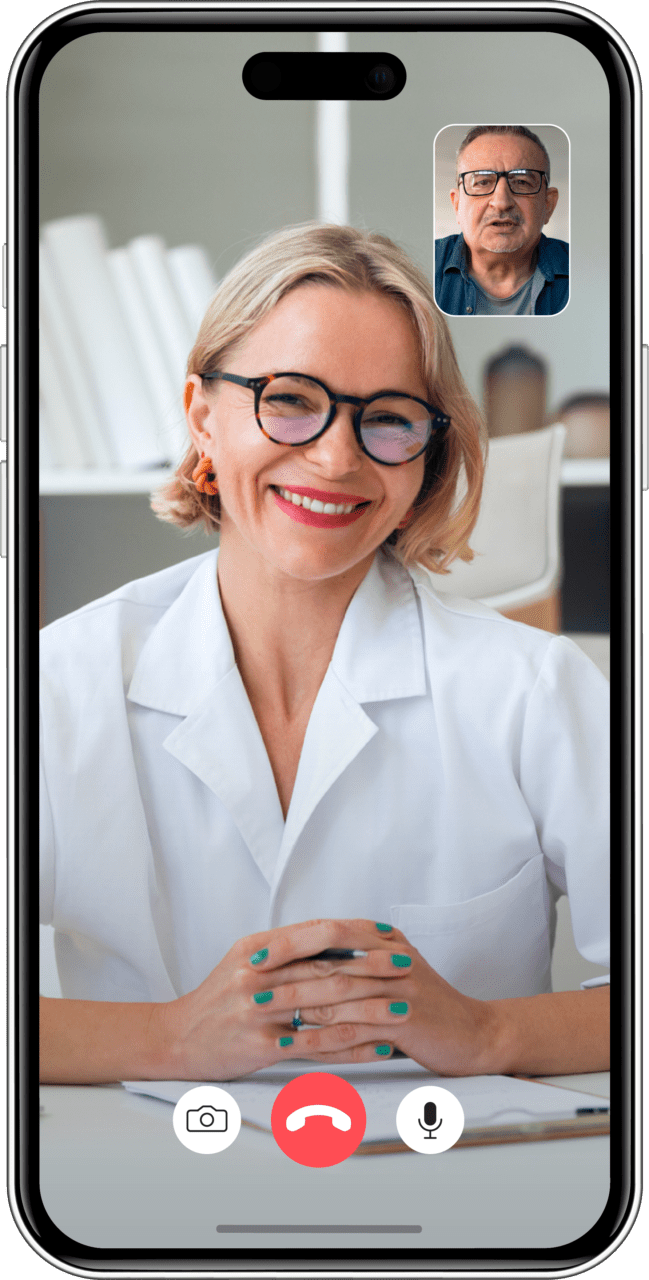
Meet with a Leafwell pharmacist online
A cannabis-knowledgeable pharmacist discusses your PTSD symptoms and goals in a confidential consultation.
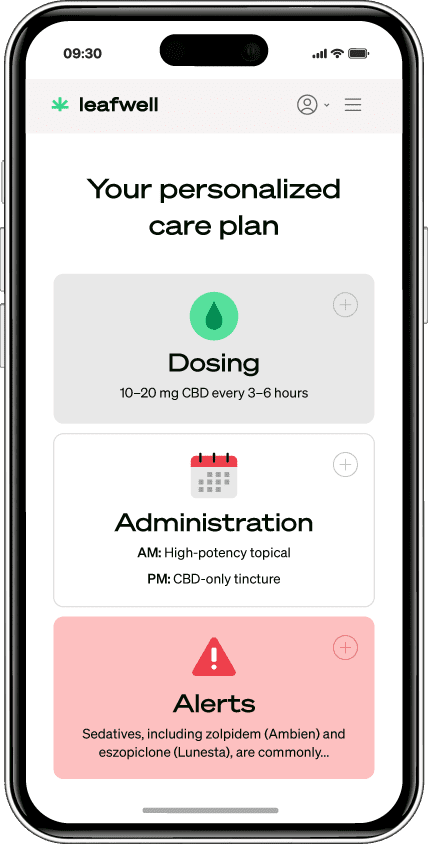
Get your product recommendations
Receive pharmacist-tailored product and dosing guidance for your specific symptoms.
Frequently asked questions
Is PTSD a qualifying condition for medical cannabis?
Yes — PTSD is one of the most widely accepted qualifying conditions in the country. 33 states list it by name, along with Puerto Rico, Guam, the US Virgin Islands, and the Northern Mariana Islands. In most of the remaining jurisdictions, a licensed provider may certify PTSD at their discretion. See the state table above for how your state handles it.
How does medical cannabis help with PTSD symptoms?
Research suggests cannabis may help with several hallmark PTSD symptoms — nightmares, insomnia, anxiety, and hyperarousal. Low-dose THC reduces REM sleep, which may lower the frequency and intensity of trauma-related nightmares, while CBD may dampen the fear response and reduce anxiety without intoxication. Responses vary, which is why physician guidance on product and dose matters.
Can medical cannabis replace therapy for PTSD?
No — medical cannabis is typically used alongside, not instead of, evidence-based treatments like EMDR, cognitive processing therapy, or prolonged exposure. Many providers describe a combined approach where cannabis helps manage acute symptoms while therapy addresses the underlying trauma. Always discuss your full treatment plan with your healthcare team.
What dose of cannabis is recommended for PTSD?
Dosing is individual, but the dose window matters more in PTSD than in most conditions: low THC doses may ease symptoms while high doses can worsen anxiety or trigger dissociation. A common approach is establishing a CBD baseline (10–25 mg daily), then adding THC at 2.5 mg and holding each dose for several nights before adjusting. A Leafwell provider can guide your titration.
Do I need a PTSD diagnosis to get a medical cannabis card?
In most states, yes — you’ll need documentation of a PTSD diagnosis from a healthcare provider, and a few states go further: Missouri requires diagnosis by a state-licensed psychiatrist, and Utah and Vermont require concurrent mental-health treatment. For veterans, a VA PTSD diagnosis serves as valid supporting documentation. Your Leafwell provider reviews your medical history during the consultation.
Which states don’t list PTSD as a qualifying condition?
Massachusetts and Nevada don’t name PTSD — in Massachusetts, providers may certify it under the “other debilitating conditions” catch-all, and in Nevada a provider may consider it under the listed “an anxiety disorder.” Alaska is the one state with no practical route. California, Washington D.C., Maine, New York, Oklahoma, and Virginia have no fixed condition list, so PTSD is certified at the provider’s discretion.
Can veterans use medical cannabis for PTSD?
Yes — state medical cannabis programs are open to veterans, and a VA PTSD diagnosis serves as valid supporting documentation. VA providers cannot recommend cannabis under federal law, but VA policy allows them to discuss cannabis use with patients, and participation in a state medical cannabis program does not affect a veteran’s eligibility for VA care and benefits.
How do I get a medical card for PTSD online?
Select your state, complete a video evaluation with a licensed Leafwell provider, and if approved you receive your certification the same day. Most patients complete the process in under 30 minutes.
Take a gentler, more natural path to healing after trauma
Begin your journey now — schedule a physician consultation today and get approved in minutes.
References
- Jetly R, Heber A, Fraser G, Boisvert D. (2015). The efficacy of nabilone, a synthetic cannabinoid, in the treatment of PTSD-associated nightmares: a preliminary randomized, double-blind, placebo-controlled cross-over design study. Psychoneuroendocrinology, 51, 585–588. doi:10.1016/j.psyneuen.2014.11.002
- LaFrance EM, Glodosky NC, Bonn-Miller M, Cuttler C. (2020). Short and long-term effects of cannabis on symptoms of post-traumatic stress disorder. Journal of Affective Disorders, 274, 298–304. doi:10.1016/j.jad.2020.05.132
- Neumeister A, et al. (2013). Elevated brain cannabinoid CB1 receptor availability in post-traumatic stress disorder: a positron emission tomography study. Molecular Psychiatry, 18, 1034–1040. doi:10.1038/mp.2013.61
- Rabinak CA, et al. (2023). Cannabinoid modulation of corticolimbic activation during extinction learning and fear renewal in adults with posttraumatic stress disorder. Neurobiology of Learning and Memory, 201, 107758. doi:10.1016/j.nlm.2023.107758
- Bonn-Miller MO, Sisley S, Riggs P, et al. (2021). The short-term impact of 3 smoked cannabis preparations versus placebo on PTSD symptoms: a randomized cross-over clinical trial. PLOS ONE, 16(3), e0246990. doi:10.1371/journal.pone.0246990