Leafwell’s licensed providers help chronic pain patients explore medical cannabis as a supervised treatment option — online, same day, in most states.
- ✓Chronic pain is the most widely listed qualifying condition in the country — 29 states plus Puerto Rico name it directly
- ✓Where it isn’t named, severe pain from a chronic condition usually qualifies through a symptom clause — or at the provider’s discretion
- ✓Physician-supervised, lab-tested, state-regulated products

Chronic pain qualifies in nearly every state with a medical program. Get your recommendation today.
Key takeaways
- Chronic pain qualifies by name in 29 states plus Puerto Rico — the most widely listed condition in any state medical cannabis program
- Wording matters: some states set a higher bar, such as “intractable” pain (Arkansas, Georgia, Washington) or pain unresponsive to treatment for 3–6 months (Delaware, North Dakota)
- Massachusetts is the only program state that doesn’t list pain at all (provider catch-all only); Florida requires chronic pain to originate from a listed condition
- The National Academies concluded there is conclusive or substantial evidence that cannabis is effective for the treatment of chronic pain in adults
- Studies report reduced opioid use among chronic pain patients using medical cannabis — always under medical supervision

67%
reduction in opioid intake reported by medical cannabis patients

27%
lower risk of visiting urgent care

22%
increase in quality of life among patients with chronic pain
Understanding chronic pain and its impact
Chronic pain — pain that persists or recurs for three months or longer — affects an estimated 51.6 million U.S. adults, about one in five, according to the CDC.[2] It takes many forms: nociceptive pain from tissue damage such as arthritis or back injury, neuropathic pain from nerve damage such as diabetic neuropathy or sciatica, and conditions like fibromyalgia where the nervous system itself amplifies pain signals. Beyond the pain itself, it erodes sleep, mood, mobility, and the ability to work — roughly 17 million Americans experience high-impact chronic pain that limits daily life.
Most patients start with conventional care: NSAIDs, physical therapy, nerve blocks, antidepressants or anticonvulsants for nerve pain, and in some cases opioids. Treatment responses vary widely, and many patients cycle through several approaches before finding durable relief.
When chronic pain continues despite treatment
Patients may experience partial relief, side effects that limit dosing — NSAIDs carry stomach and kidney risks with long-term use — or growing tolerance and dependence concerns with opioid therapy. When pain persists despite conventional treatment, patients and providers may discuss additional approaches. Medical cannabis enters those conversations not as a replacement but as a potential adjunct option within a supervised medical framework — and several states now explicitly recognize it as an alternative to opioid therapy.
How cannabis may help chronic pain
Cannabis interacts with the endocannabinoid system (ECS), which helps regulate pain signaling, inflammation, and immune response. The National Academies of Sciences reviewed the evidence and concluded there is conclusive or substantial evidence that cannabis is effective for the treatment of chronic pain in adults — one of the strongest ratings it gave any medical use.[1] Two primary compounds behave differently:
- THC (Tetrahydrocannabinol): Activates CB1 receptors in the central nervous system, dampening pain signaling and easing the muscle tension and sleep loss that often accompany chronic pain. Dosing is individual — lower doses are typically better tolerated.[4]
- CBD (Cannabidiol): A non-intoxicating compound with anti-inflammatory activity, acting through CB2 receptors on immune cells and other targets involved in pain and inflammation. Often used in balanced CBD:THC ratios for daytime relief.[5]
Some studies also report that chronic pain patients using medical cannabis reduce their opioid use, though findings vary and any medication change should happen under medical supervision.[3] Dose, ratio, and delivery method matter significantly — medical guidance helps patients match them to their specific pain presentation.
Cannabis — particularly CBD — is metabolised by the cytochrome P450 enzyme system and can interact with opioids, benzodiazepines, blood thinners such as warfarin, and some antidepressants. Combining cannabis with opioids or other CNS depressants can amplify sedative effects. Never adjust or stop a prescribed pain medication on your own — always disclose all medications at your Leafwell appointment.
Chronic pain may qualify you for a medical cannabis card.
See if you qualify in your state — most approvals completed same day.
- ✓Get approved in minutes
- ✓Same-day appointments available
- ✓Money back guarantee
Choosing cannabis products for chronic pain
Rather than strain names, clinical importance centers on cannabinoid profile, delivery method, and timing.
- Topicals (localized, non-intoxicating): Creams and balms applied directly to joints or muscles — a common starting point for localized musculoskeletal pain.
- Sublingual tinctures (onset 15–45 min, duration 4–6 hrs): Precise titration; useful for steady daytime relief.
- Oral edibles/capsules (onset 45–120 min, duration 6–8 hrs): Longest-lasting option — suited to all-day or overnight pain control.
- Vaporized flower (onset 5–15 min, duration 2–3 hrs): Fastest relief for breakthrough pain; shorter duration.
- CBD:THC ratios: Balanced or CBD-dominant ratios provide anti-inflammatory support with less intoxication — often preferred for daytime function.
Responses vary from person to person, which is why individualized medical guidance is recommended before starting cannabis for chronic pain. For a closer look at specific cultivars patients discuss, see our guide to the best strains for chronic pain.
Chronic pain and medical marijuana eligibility by state
Chronic pain qualifies for a medical marijuana card by name in 29 states plus Puerto Rico — more than any other condition — though the wording varies: some list “chronic pain” outright, while others require “intractable” pain or pain that has resisted treatment for months. In about nine more jurisdictions, severe pain from a chronic or debilitating condition qualifies through a symptom clause, and six no-list jurisdictions leave certification to provider discretion. Massachusetts is the only program state where pain isn’t listed at all — patients there qualify through the provider catch-all.
| State | Chronic pain qualifying? | How to qualify |
|---|---|---|
| Alabama | Yes — with restrictions | Chronic or intractable pain qualifies only where conventional treatment and opioid therapy are contraindicated or ineffective; documented treatment failure required |
| Alaska | Yes — via symptom clause | Severe pain produced by a chronic or debilitating disease |
| Arizona | Yes — via symptom clause | Severe and chronic pain produced by a chronic condition |
| Arkansas | Yes — with restrictions | Intractable pain unresponsive to treatment for 6+ months |
| California | Yes — listed directly | Chronic pain is an approved condition; arthritis and migraine are also listed |
| Colorado | Yes — listed directly | Severe pain is listed; also any condition for which a physician could prescribe an opioid |
| Connecticut | Yes — with restrictions | Chronic pain of 6+ months associated with a specified underlying condition, refractory to other treatment; several specific pain syndromes also listed |
| Delaware | Yes — with restrictions | Severe debilitating pain unresponsive to treatment for 3+ months |
| District of Columbia | At provider’s discretion | No condition list; adults 21+ may self-certify |
| Florida | Yes — with restrictions | Chronic nonmalignant pain must be caused by or originate from a listed qualifying condition |
| Georgia | Yes — with restrictions | Intractable pain is on the closed list (product-form limits apply) |
| Guam | Yes — via symptom clause | Severe or chronic pain from a debilitating condition |
| Hawaii | Yes — via symptom clause | Severe pain from a debilitating condition; since Act 241 (2025) a provider may certify any diagnosed condition |
| Illinois | Yes — listed directly | Chronic pain is an approved condition; Opioid Alternative route also available for 21+ |
| Iowa | Yes — listed directly | Chronic pain is an approved condition (limited program: no smokable flower, THC caps) |
| Kentucky | Yes — listed directly | Chronic, severe, intractable, or debilitating pain |
| Louisiana | Yes — listed directly | Intractable pain is listed; a clinician may also certify any condition they consider debilitating |
| Maine | At provider’s discretion | No condition list; provider certifies likely therapeutic or palliative benefit |
| Maryland | Yes — listed directly | Severe or chronic pain is an approved condition |
| Massachusetts | Not directly | Chronic pain is not on the enumerated list; qualifies via the provider catch-all |
| Michigan | Yes — listed directly | Chronic pain is listed; severe and chronic pain also qualifies via symptom clause |
| Minnesota | Yes — listed directly | Both chronic pain and intractable pain are approved conditions |
| Mississippi | Yes — listed directly | Chronic pain from a debilitating condition; pain unresponsive to opioid treatment also listed |
| Missouri | Yes — listed directly | Chronic condition causing severe persistent pain; also conditions normally treated with dependence-forming medication |
| Montana | Yes — listed directly | Severe chronic pain is an approved condition |
| Nevada | Yes — via symptom clause | Severe or chronic pain produced by a condition or its treatment |
| New Hampshire | Yes — listed directly | Moderate to severe chronic pain and severe pain are stand-alone qualifying conditions |
| New Jersey | Yes — listed directly | Chronic pain is an approved condition |
| New Mexico | Yes — listed directly | Severe chronic pain is an approved condition |
| New York | At provider’s discretion | No condition list; any condition deemed suitable by the provider |
| North Dakota | Yes — via symptom clause | Severe debilitating pain unresponsive to treatment for 3+ months; spinal stenosis or chronic back pain with intractable spasticity also listed |
| Northern Mariana Islands | Yes — via symptom clause | Severe or chronic pain from a debilitating condition |
| Ohio | Yes — listed directly | Pain that is chronic and severe, or intractable |
| Oklahoma | At provider’s discretion | No fixed list; physician certifies |
| Oregon | Yes — via symptom clause | Severe pain produced by a condition or its treatment |
| Pennsylvania | Yes — listed directly | Severe chronic or intractable pain, including pain of neuropathic origin |
| Puerto Rico | Yes — listed directly | Chronic pain is on the Department of Health condition list |
| Rhode Island | Yes — listed directly | Severe debilitating chronic pain is an approved condition |
| South Dakota | Yes — listed directly | Severe debilitating pain — the qualifying condition for over 70% of South Dakota patients |
| Texas | Yes — listed directly | A condition causing chronic pain for which a physician would otherwise prescribe an opioid (low-THC prescription program) |
| US Virgin Islands | At provider’s discretion | Provider’s therapeutic-benefit judgment |
| Utah | Yes — listed directly | Persistent pain lasting longer than two weeks; acute post-surgical pain also listed |
| Vermont | Yes — via symptom clause | Chronic pain qualifies via the symptom prong; Vermont requires a 3-month provider relationship with an in-person exam for most patients |
| Virginia | At provider’s discretion | No condition list; any condition the practitioner determines may benefit |
| Washington | Yes — with restrictions | Intractable pain unrelieved by standard treatment; must significantly interfere with daily living |
| West Virginia | Yes — listed directly | Severe chronic or intractable pain of neuropathic origin or otherwise |
Note: Qualifying conditions change; confirm current rules during your Leafwell evaluation. States without active medical programs (Idaho, Indiana, Kansas, North Carolina, South Carolina, Tennessee, Wisconsin, Wyoming; Nebraska’s program is still being implemented) are not listed.
How patients with chronic pain access medical cannabis
- Medical evaluation — A licensed provider reviews your pain diagnosis, treatment history, and current medications to determine if medical cannabis is appropriate.
- Certification if appropriate — If the provider determines cannabis may be beneficial, they issue certification under your state’s medical marijuana program.
- State registration — Patients complete registration with their state’s health department to obtain the medical marijuana ID card.
- Access regulated products — Once approved, patients purchase lab-tested cannabis from licensed dispensaries with clearly labeled THC and CBD levels.
Chronic pain may qualify you for a medical cannabis card.
Living with chronic pain? Get your medical cannabis card online in minutes — with larger purchase limits and up to 40% in tax savings.
- ✓Get approved in minutes
- ✓Same-day appointments available
- ✓Money back guarantee
Medical cannabis helped Samantha get her independence back.
After years of chronic pain, everyday tasks felt out of reach — until Samantha explored medical cannabis with her provider.

“Imagine not being able to do your own dishes — and then having that level of independence again. It is truly life-changing. Cannabis gave me my life back.”
Samantha, Leafwell patient
A cannabis care plan, tailored to your needs
We’ve made it simple to get personalized guidance from a cannabis-knowledgeable pharmacist — no medical card required.
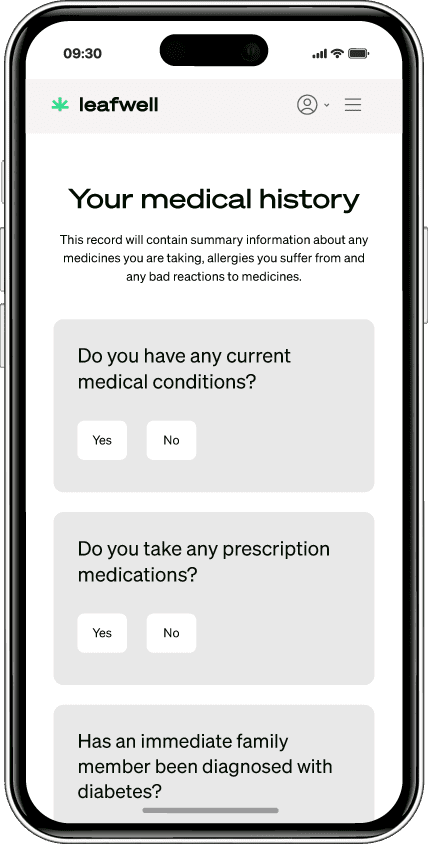
Complete a short questionnaire
Tell us about your medical background and pain history — takes under 5 minutes.

Meet with a Leafwell pharmacist online
A cannabis-knowledgeable pharmacist discusses your pain management goals in a confidential consultation.
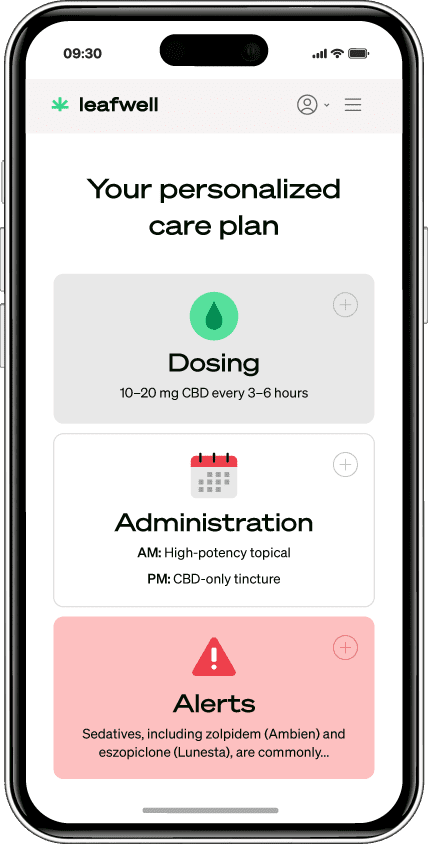
Get your product recommendations
Receive pharmacist-tailored product and dosing guidance for your specific pain needs.
Frequently asked questions
Can you get a medical cannabis card for chronic pain?
In nearly every state with a medical program. Chronic pain is the most widely listed qualifying condition in the country — 29 states plus Puerto Rico name it directly, though some require “intractable” pain or documented treatment failure. Where it isn’t named, severe pain from a chronic condition usually qualifies through a symptom clause, or a provider may certify at their discretion. Massachusetts is the only program state where pain runs solely through the provider catch-all. See the state table above for your state’s exact route.
What types of chronic pain qualify for a medical cannabis card?
Most states that list chronic pain cover persistent pain lasting three months or more, including neuropathic pain, musculoskeletal and back pain, fibromyalgia, arthritis-related pain, and pain related to injury or surgery. Some states require the pain to be “severe,” “intractable,” or unresponsive to other treatment. A licensed healthcare provider can confirm whether your specific condition qualifies in your state.
Can medical cannabis help with chronic pain?
The National Academies of Sciences concluded there is conclusive or substantial evidence that cannabis is effective for the treatment of chronic pain in adults — one of the strongest evidence ratings for any medical use of cannabis. That said, responses vary from person to person, and cannabis works best as part of a supervised treatment plan rather than a replacement for existing care.
Is medical cannabis better than opioids for pain relief?
For many patients, medical cannabis offers meaningful pain relief with a lower risk of dependence than opioids. Research suggests it can reduce opioid use in chronic pain patients, and a number of states specifically allow cannabis as an alternative to opioid therapy — Colorado and Illinois even run dedicated opioid-alternative routes. Your provider can help you understand whether it’s appropriate for your situation.
Which form of medical cannabis has the longest-lasting pain relief?
Edibles and capsules produce the longest-lasting effects for easing chronic pain — up to 8 hours — making them suited to all-day or overnight relief. Tinctures typically last 4–6 hours, while vaporized flower acts fastest (5–15 minutes) but lasts only 2–3 hours, which some patients use for breakthrough pain.
What strains of cannabis are best for chronic pain?
Popular strains for chronic pain include Northern Lights, ACDC, and OG Kush. High-CBD strains like ACDC offer relief with little to no intoxication, while higher-THC options may also help with pain-related sleep loss. Everyone reacts differently to the compounds in cannabis, so it may take some trial and error to find what works best for you.
Is medical cannabis safe to use alongside my current pain medications?
Cannabis — particularly CBD — is metabolized by the cytochrome P450 enzyme system and can interact with opioids, benzodiazepines, blood thinners such as warfarin, and some antidepressants. Combining cannabis with opioids or other CNS depressants can amplify sedative effects. Never adjust or stop a prescribed medication on your own, and disclose all medications at your Leafwell appointment.
How do I get a medical card for chronic pain online?
Select your state, complete a video evaluation with a licensed Leafwell physician, and if approved you receive your certification the same day. Most patients complete the process in under 30 minutes.
Take a gentler, more natural path to lasting relief
Begin your journey now — schedule a physician consultation today and get approved in minutes.
References
- National Academies of Sciences, Engineering, and Medicine (2017). The Health Effects of Cannabis and Cannabinoids: The Current State of Evidence and Recommendations for Research. National Academies Press. doi:10.17226/24625
- Rikard SM, et al. (2023). Chronic Pain Among Adults — United States, 2019–2021. MMWR Morbidity and Mortality Weekly Report, 72(15), 379–385. doi:10.15585/mmwr.mm7215a1
- Boehnke KF, et al. (2016). Medical Cannabis Use Is Associated With Decreased Opiate Medication Use in a Retrospective Cross-Sectional Survey of Patients With Chronic Pain. The Journal of Pain, 17(6), 739–744. doi:10.1016/j.jpain.2016.03.002
- Whiting PF, et al. (2015). Cannabinoids for Medical Use: A Systematic Review and Meta-analysis. JAMA, 313(24), 2456–2473. doi:10.1001/jama.2015.6358
- Vučković S, et al. (2018). Cannabinoids and Pain: New Insights From Old Molecules. Frontiers in Pharmacology, 9, 1259. doi:10.3389/fphar.2018.01259