Leafwell’s licensed providers help patients in palliative and hospice care — and their caregivers — explore medical cannabis as a supervised comfort-care option, online, same day in most states.
- ✓Hospice or palliative care is a named qualifying condition in Georgia, Louisiana, Montana, New Mexico, Texas — and Puerto Rico
- ✓14 more states list terminal illness, and nearly every program covers the underlying diagnosis — cancer, ALS, HIV/AIDS
- ✓Physician-supervised, lab-tested, state-regulated products

Key takeaways
- Hospice or palliative care is a named qualifying condition in Georgia, Louisiana, Montana, New Mexico, Texas, and Puerto Rico
- 14 more states list terminal illness as a qualifying condition, most with a life-expectancy window of 6 months to 1 year
- Nearly every program covers the underlying diagnosis — cancer, ALS, HIV/AIDS — or its symptoms: severe pain, nausea, cachexia
- In the Quebec Cannabis Registry, average cancer pain fell 41% at three months and medication burden decreased (358 patients)
- Hospice facilities set their own cannabis policies — always confirm with the provider before use

41%reduction in average cancer pain at 3 months in a 358-patient registry study

78%reduction in mean daily opioid dose at 6 months among 1,145 patients

45%of patients taking benzodiazepines discontinued them within six months
Understanding palliative care and hospice
Palliative care is specialized medical care for people living with a serious illness — cancer, heart failure, ALS, COPD, or an advanced neurological disease. Its goal is not to cure the illness but to relieve its symptoms and stress, improving quality of life for both the patient and their family. Palliative care can begin at any stage of illness, alongside curative treatment.
Hospice care is palliative care for the final phase of life — generally when a physician certifies a life expectancy of six months or less and treatment shifts entirely to comfort. In this phase the symptom burden concentrates: pain, nausea and vomiting, appetite loss and wasting (cachexia), anxiety, and disrupted sleep. Managing them often means juggling many medications at once, each with its own side effects.
When symptoms continue despite treatment
Opioids remain the standard of care for severe pain at the end of life, but they bring constipation, sedation, and rising tolerance. Benzodiazepines used for anxiety or agitation add confusion and fall risk in frail patients. When symptoms persist — or when side effects and pill burden become problems of their own — patients, families, and care teams may discuss additional approaches. Medical cannabis enters those conversations not as a replacement for hospice medications, but as a potential adjunct within a supervised medical framework.
How cannabis may help in palliative care
Cannabis interacts with the endocannabinoid system (ECS), which helps regulate pain signaling, nausea, and appetite — the three symptom domains that dominate comfort care. Two primary compounds behave differently:
- THC (Tetrahydrocannabinol): May ease pain and reduce nausea while stimulating appetite. Synthetic THC medications (dronabinol, nabilone) have been FDA-approved for decades for chemotherapy-induced nausea and AIDS-related weight loss. In the Quebec Cannabis Registry, 358 patients with cancer reported significant reductions in pain at 3, 6, and 9 months. [1]
- CBD (Cannabidiol): A non-intoxicating compound that some patients report helps with anxiety and sleep — relevant for patients who want relief while staying clear-headed with family.
Research also suggests medical cannabis may help some patients rely less on other medications. In a 1,145-patient prospective study, mean daily opioid dose fell 78% over six months (152 mg to 32.2 mg morphine equivalent). [2] In a separate 146-patient cohort, 45% of those taking benzodiazepines had discontinued them within about six months of starting medical cannabis. [3] These are observational findings, not guarantees — systematic reviews note that high-quality trial evidence in palliative settings is still limited [4] — but early registry data show cannabis is generally well tolerated in palliative populations, with adverse events that are mostly mild to moderate. [5]
Cannabis — particularly CBD — is metabolised by the cytochrome P450 enzyme system and can interact with opioids, benzodiazepines, anticoagulants, antidepressants, and some chemotherapy agents. Combining cannabis with CNS depressants can amplify sedation. Always disclose every medication — including chemotherapy and blood thinners — at your Leafwell appointment, and keep the hospice or palliative team informed.
Palliative or hospice care may qualify you for a medical cannabis card.
See if you qualify in your state — most approvals completed same day, and caregivers can join the appointment.
- ✓Get approved in minutes
- ✓Same-day appointments available
- ✓Money back guarantee
Choosing cannabis products for palliative care
In comfort care, delivery method matters as much as cannabinoid profile — many patients have difficulty swallowing, restricted lungs, or facility rules that prohibit smoking.
- Sublingual tinctures (onset 15–45 min, duration 4–6 hrs): Precise, drop-by-drop titration; no swallowing of pills required.
- Oral edibles and capsules (onset 45–120 min, duration 6–8 hrs): Long-lasting relief for overnight comfort; best where swallowing is not impaired.
- Topicals and transdermal patches: Localized relief for joint and skin discomfort without intoxication; patches provide slow, steady delivery.
- Suppositories: An option for patients who cannot swallow or keep food down.
- THC:CBD ratios: In the Quebec registry, balanced THC:CBD products were associated with better pain relief than THC-dominant or CBD-dominant products. [1]
Responses vary from person to person — and interact with everything else on the medication list — which is why individualized medical guidance is essential before adding cannabis to a palliative care plan.
Palliative and hospice care medical marijuana eligibility by state
Hospice or palliative care qualifies for a medical marijuana card by name in Georgia, Louisiana, Montana, New Mexico, Texas, and Puerto Rico. Fourteen more states list terminal illness as a qualifying condition, usually with a life-expectancy window of six months to a year. Everywhere else, patients qualify through the underlying diagnosis — cancer, ALS, HIV/AIDS — or its symptoms, such as severe pain, intractable nausea, or cachexia. In roughly fifteen jurisdictions, a licensed provider may certify any condition they determine may benefit.
| State | Palliative/hospice qualifying? | How to qualify |
|---|---|---|
| Alabama | Terminal illness listed | Terminal illness is a listed condition; documented failure of conventional treatment required (limited product forms) |
| Alaska | Not directly | Via the underlying condition producing cachexia, severe pain, severe nausea, seizures, or muscle spasms |
| Arizona | Not directly | Via the underlying diagnosis (cancer, ALS, HIV/AIDS) or its symptoms — cachexia, severe pain, severe nausea |
| Arkansas | Not directly | Via the underlying diagnosis (cancer, ALS) or cachexia, intractable pain, severe nausea |
| California | Not directly | Broad catch-all — any illness for which marijuana provides relief |
| Colorado | Not directly | Via cachexia, severe pain, severe nausea — or any condition for which a physician could prescribe an opioid |
| Connecticut | Terminal illness listed | “Terminal illness requiring end-of-life care” is a listed condition |
| Delaware | Terminal illness listed | Terminal illness is listed; practitioners may also certify any condition with palliative or therapeutic benefit |
| Florida | Terminal illness listed | Terminal condition qualifies (diagnosis confirmed by a second physician) |
| Georgia | Yes — listed directly | “Hospice program patient” is a listed condition (limited product forms) |
| Guam | Not directly | Via the underlying diagnosis, such as cancer, or its symptoms |
| Hawaii | Not directly | Provider may certify any diagnosed condition (Act 241); or via cachexia, severe pain, severe nausea |
| Illinois | Not directly | Via the underlying diagnosis — cancer, ALS, chronic pain — among the state’s listed conditions |
| Iowa | Terminal illness listed | Terminal illness with a life expectancy under one year is a listed condition |
| Kentucky | Terminal illness listed | Terminal illness added by executive order, June 2026 |
| Louisiana | Yes — listed directly | Hospice and palliative care conditions are listed; clinicians may also certify any condition they consider debilitating |
| Maine | At provider’s discretion | No condition list — provider certifies the patient is “likely to receive therapeutic or palliative benefit” |
| Maryland | Not directly | Via severe or chronic pain, nausea, cachexia, anorexia — or the severe-condition catch-all |
| Massachusetts | Not directly | Via the underlying diagnosis (cancer, ALS, HIV/AIDS) or practitioner catch-all |
| Michigan | Not directly | Via the underlying diagnosis or the cachexia / severe pain / nausea symptom clause |
| Minnesota | Terminal illness listed | Terminal illness (under 1 year) with pain, nausea, or cachexia; practitioner catch-all also available |
| Mississippi | Not directly | Via the underlying diagnosis, or any chronic terminal or debilitating disease producing cachexia, chronic pain, or nausea |
| Missouri | Terminal illness listed | Terminal illness is a listed condition; physician catch-all also available |
| Montana | Yes — listed directly | “Admittance into hospice care” is a listed condition |
| Nevada | Not directly | Via cancer, a neuropathic condition, or the cachexia / severe pain / nausea clause |
| New Hampshire | Not directly | Listed diagnosis plus a listed symptom; the 21+ catch-all covers any debilitating or terminal condition |
| New Jersey | Terminal illness listed | Terminal illness with a prognosis under 12 months is a listed condition |
| New Mexico | Yes — listed directly | “Hospice care” is a listed condition |
| New York | At provider’s discretion | No condition list — any condition the provider deems suitable |
| North Dakota | Terminal illness listed | Terminal illness is a listed condition |
| Northern Mariana Islands | Not directly | Via the underlying diagnosis, such as cancer, or its symptoms |
| Ohio | Terminal illness listed | Terminal illness is a listed condition (board-added, 2021) |
| Oklahoma | At provider’s discretion | No condition list — physician discretion |
| Oregon | Not directly | Via cachexia, severe pain, severe nausea, or a degenerative neurological condition |
| Pennsylvania | Terminal illness listed | Terminal illness is a listed condition |
| Puerto Rico | Yes — listed directly | “Incurable and advanced diseases requiring palliative care” is on the Department of Health list |
| Rhode Island | Not directly | Via cancer, HIV/AIDS, cachexia, or severe debilitating chronic pain; the department may approve other conditions |
| South Dakota | Not directly | Via cancer with severe pain, nausea, or cachexia — or severe debilitating pain |
| Texas | Yes — listed directly | Terminal illness / hospice or palliative care is listed (low-THC prescription program) |
| US Virgin Islands | Not directly | Via the underlying diagnosis or the provider’s therapeutic-benefit judgment |
| Utah | Terminal illness listed | Terminal illness with a prognosis under 6 months is listed; persistent pain lasting over two weeks also qualifies |
| Vermont | Not directly | Via cancer, HIV/AIDS, or the symptom prong; the 3-month provider-relationship rule is waived for terminal illness, cancer, and AIDS |
| Virginia | At provider’s discretion | No condition list — any condition the practitioner determines will benefit |
| Washington | Not directly | Via cancer, HIV, or intractable pain (closed list — no catch-all) |
| Washington D.C. | At provider’s discretion | No fixed list; adults 21+ may self-certify |
| West Virginia | Terminal illness listed | Terminal illness (life expectancy around one year or less) is a listed condition |
Note: Qualifying conditions change; confirm current rules during your Leafwell evaluation. States without active medical programs (Idaho, Indiana, Kansas, North Carolina, South Carolina, Tennessee, Wisconsin, Wyoming; Nebraska’s program is still being implemented) are not listed.
How patients in palliative care access medical cannabis
- Medical evaluation — A licensed provider reviews the diagnosis, prognosis, symptom history, and current medications to determine if medical cannabis is appropriate. A caregiver or family member can join the telehealth visit.
- Certification if appropriate — If the provider determines cannabis may be beneficial, they issue certification under your state’s medical marijuana program.
- State registration — Patients complete registration with their state’s health department. Most programs also let patients register a designated caregiver who can purchase and administer cannabis on their behalf.
- Access regulated products — Once approved, patients or their registered caregivers purchase lab-tested cannabis from licensed dispensaries with clearly labeled THC and CBD levels.
Palliative or hospice care may qualify you for a medical cannabis card.
Focused on comfort? Get a medical cannabis card online in minutes — with larger purchase limits and up to 40% in tax savings.
- ✓Get approved in minutes
- ✓Same-day appointments available
- ✓Money back guarantee
Medical cannabis helped Rosa’s family focus on comfort.
When her husband entered home hospice, Rosa wanted one more option to ease his evenings — and his care team agreed medical cannabis was worth exploring.

“Hospice gave us wonderful support, but the nights were still hard. Once we had the card, he was calmer in the evenings — and he started eating dinner with us again.”
Rosa, caregiver for a Leafwell patient *name and photo changed for privacy
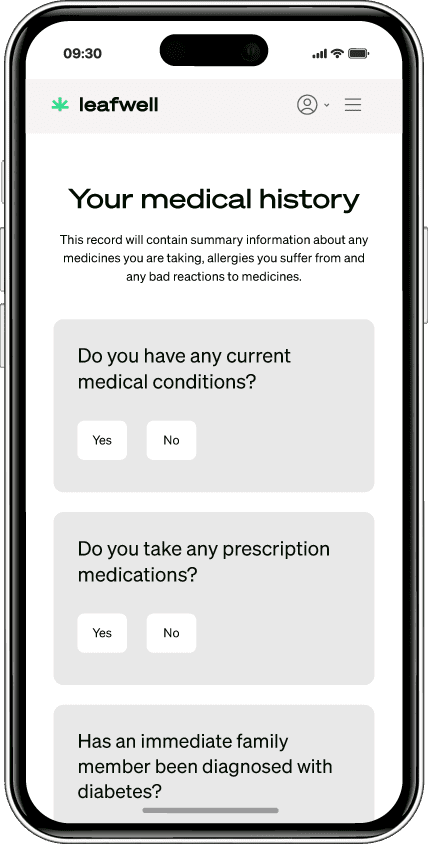
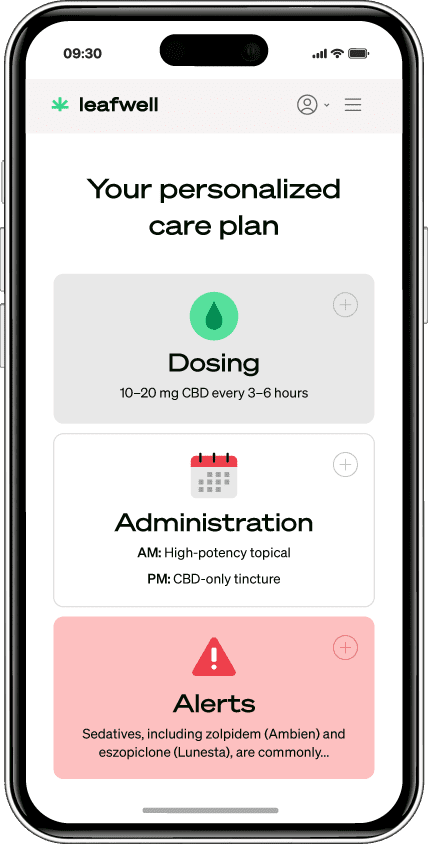
A cannabis care plan, tailored to comfort
We’ve made it simple to get personalized guidance from a cannabis-knowledgeable pharmacist — no medical card required, and caregivers are welcome to join.

Frequently asked questions
Can you get a medical cannabis card for palliative or hospice care?
It depends on your state. Georgia, Louisiana, Montana, New Mexico, Texas, and Puerto Rico list hospice or palliative care by name, and fourteen more states list terminal illness as a qualifying condition. Everywhere else, the underlying diagnosis — cancer, ALS, HIV/AIDS — or its symptoms, such as severe pain or cachexia, is the practical qualifying route. A Leafwell provider can tell you how it is handled in your state.
What is the difference between palliative care and hospice care?
Palliative care is symptom-focused care that can begin at any stage of a serious illness, alongside curative treatment. Hospice care is palliative care for the final phase of life — generally when a physician certifies a life expectancy of six months or less and treatment shifts entirely to comfort. Both focus on quality of life rather than cure.
Can you use medical cannabis in a hospice facility?
Facility policies vary. Some hospice providers allow medical cannabis, often limited to non-smoked forms such as tinctures, edibles, or patches; others prohibit it on site. Ask the hospice provider about their policy before use, and keep the care team informed about any cannabis products being used.
Can cannabis replace opioids or other medications in palliative care?
Cannabis is an adjunct, not a replacement. Some studies suggest patients may rely less on opioids and benzodiazepines after starting medical cannabis — one 1,145-patient study recorded a 78% drop in mean daily opioid dose over six months — but any medication change at the end of life should be made only with the prescribing provider and the hospice team.
Can a caregiver get medical cannabis for a hospice patient?
In most state programs, yes. Patients can register a designated caregiver who is legally allowed to purchase cannabis from a dispensary and administer it on the patient’s behalf — essential for patients who are homebound or bedbound. Caregiver rules, background checks, and limits vary by state, so confirm the details during your evaluation.
What forms of cannabis work best in palliative care?
Sublingual tinctures allow precise dosing without pills; edibles and capsules provide long-lasting overnight relief; topicals and transdermal patches offer localized comfort without intoxication; and suppositories are an option for patients who cannot swallow. Many facilities prohibit smoking, so non-inhaled forms are usually the practical choice.
Does Medicare or the hospice benefit cover medical cannabis?
No. Medical cannabis products sold in state programs are not FDA-approved, so Medicare, Medicaid, private insurance, and the Medicare hospice benefit do not cover them. Patients pay out of pocket for both the evaluation and the products, though a medical card typically brings larger purchase limits and tax savings compared to recreational purchase.
How do I get a medical card for someone in hospice online?
Select your state, complete a video evaluation with a licensed Leafwell physician — a caregiver or family member can join and help — and if approved you receive certification the same day in most states. Most patients complete the process in under 30 minutes.
Take a gentler, more natural path to comfort
Schedule a physician consultation today — same-day approvals in most states, and caregivers are welcome to join the visit.
References
- Aprikian S, et al. (2024). Medical cannabis is effective for cancer-related pain: Quebec Cannabis Registry results. BMJ Supportive & Palliative Care, 13(e3), e1285–e1291. doi:10.1136/spcare-2022-004003
- Lucas P, et al. (2021). Cannabis Significantly Reduces the Use of Prescription Opioids and Improves Quality of Life in Authorized Patients: Results of a Large Prospective Study. Pain Medicine, 22(3), 727–739. doi:10.1093/pm/pnaa396
- Purcell C, et al. (2019). Reduction of Benzodiazepine Use in Patients Prescribed Medical Cannabis. Cannabis and Cannabinoid Research, 4(3), 214–218. doi:10.1089/can.2018.0020
- Doppen M, et al. (2022). Cannabis in Palliative Care: A Systematic Review of Current Evidence. Journal of Pain and Symptom Management, 64(5), e260–e284. doi:10.1016/j.jpainsymman.2022.06.002
- Nimalan D, et al. (2022). UK Medical Cannabis Registry palliative care patients cohort: initial experience and outcomes. Journal of Cannabis Research, 4(1), 3. doi:10.1186/s42238-021-00114-9