Is THCA legal in Georgia? THCA, delta-8 and THC gummies in 2026

8 min read
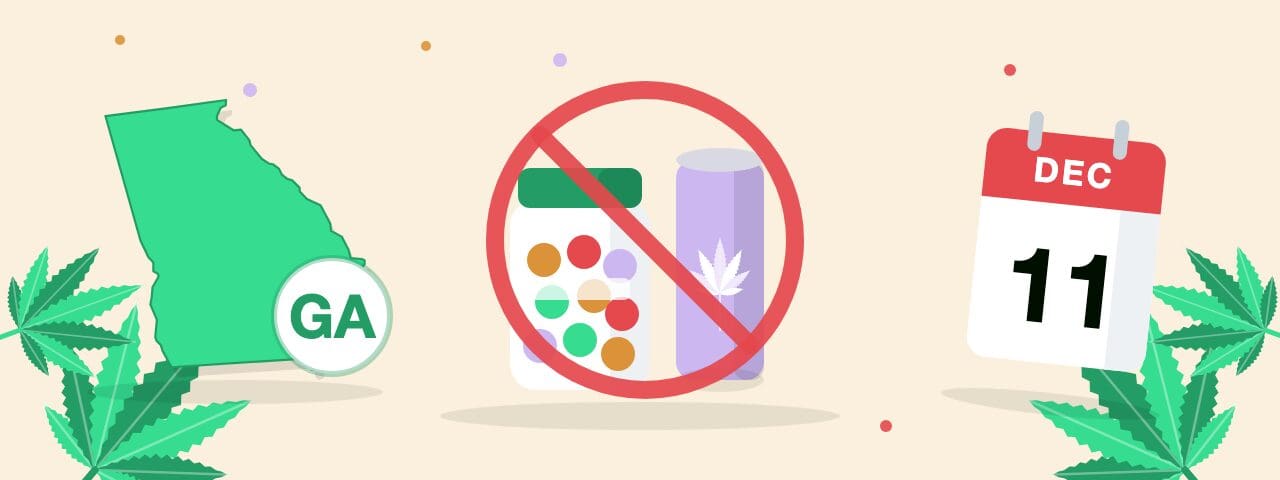

Key takeaways
- Since October 1, 2024, Georgia counts THCA toward the 0.3% THC limit for hemp, so THCA flower is not legal hemp, and raw hemp flower cannot be sold at retail at all.
- Delta-8, hemp delta-9 gummies and non-alcoholic THC drinks are still sold under Georgia law to adults 21 and over, if they meet the 0.3% limit.
- From December 11, 2026, federal law excludes converted cannabinoids such as delta-8 and caps hemp products at 0.4 mg of total THC per container, which ends nearly all of them.
- Georgia’s Medical Cannabis Patient Registry is not affected: registered patients can hold up to 12,000 mg of THC from licensed dispensaries.
- The state registry card fee rises from $30 to $75 on December 5, 2026.
Short answer: Not as THCA flower. Since October 1, 2024, Georgia counts THCA toward the 0.3% THC limit for hemp, so THCA flower fails the test, and raw hemp flower cannot be sold at retail at all. Delta-8 and hemp delta-9 gummies are still sold to adults 21 and over under Georgia law, but on December 11, 2026 federal law ends almost all of them. Georgia’s Medical Cannabis Patient Registry is not affected.
This guide is for Georgians who buy THCA flower, delta-8, hemp THC gummies, drinks or vapes and want to know what is legal now and what changes next. It walks through each product under Georgia’s hemp law, then the December 11 federal deadline, then the medical route. Everything below is current as of November 17, 2026 and links to the statute and the state agencies. It is general information, not legal advice.
Is THCA legal in Georgia?
THCA flower is not. THCA is the acid form of THC that turns into delta-9 THC when it is heated (our THCA guide explains the chemistry). Georgia’s hemp law, SB 494, has measured hemp by “total delta-9-THC” since October 1, 2024: the THCA content multiplied by 0.877, plus the delta-9 THC, must come in at or under 0.3% by dry weight. THCA flower is sold because it is high in THCA, so nearly all of it fails.
The same law separately bans offering “the unprocessed flower or leaves of the hemp plant” for sale at retail, “regardless of the total delta-9-THC concentration”. So even hemp flower that passes the THC test cannot be sold in a Georgia shop. Extracts and products made from the flower are still allowed if they pass.
Ordering online does not change the test. A product that fails Georgia’s total-THC limit is not legal hemp in Georgia, wherever it was bought, which leaves it under the state’s marijuana laws. Possessing an ounce or less of marijuana is a misdemeanor in Georgia, punishable by up to 12 months in jail, a fine of up to $1,000, or both (O.C.G.A. § 16-13-2(b)). THCA vape cartridges and concentrates face the same math as flower.
Is delta-8 legal in Georgia?
Under Georgia law, for now, yes, within limits. SB 494 regulates hemp by its total delta-9 THC and does not name delta-8, so licensed retailers still sell delta-8 gummies and vapes that meet the 0.3% delta-9 limit, only to buyers 21 and over, and only with a full-panel certificate of analysis. The 2026 session did not change that: SB 33 started as a bill to cap total THC in consumable hemp, but the version signed on May 11, 2026 contains no hemp provisions.
Federal law ends it on December 11, 2026. Almost all commercial delta-8 is made by converting CBD in a lab, and the new federal hemp definition excludes cannabinoids that were “synthesized or manufactured outside the plant”. Delta-8 products also carry far more than the new federal cap of 0.4 mg of total THC per container. From that day, delta-8 is not hemp under federal law in Georgia or anywhere else.
Are THC gummies legal in Georgia?
Hemp delta-9 gummies are legal under Georgia law today if they meet the 0.3% total delta-9 THC limit by dry weight and are sold to adults 21 and over. SB 494 bans hemp in “food products”, meaning anything eaten for nourishment, but it says in so many words that it does not stop the sale of hemp “contained within gummies or consumable base oils”. Packaging must be child-resistant, tamper-evident and not attractive to children, and it cannot copy an existing candy or snack brand.
The federal cap is what ends most of them. A single hemp delta-9 gummy usually carries more than 0.4 mg of THC, and the new definition allows no more than 0.4 mg of total THC per container, the whole jar or packet, so from December 11, 2026 a typical package of THC gummies is no longer hemp.
Are THC drinks legal in Georgia?
Non-alcoholic hemp THC drinks are legal under Georgia law if they meet the same 0.3% limit and are sold to adults 21 and over. SB 494 bans hemp only in drinks that contain alcohol. Georgia’s rule is not the problem; the federal one is. A typical hemp THC seltzer carries 2 mg to 10 mg of THC per can, and a can is a container, so from December 11, 2026 nearly all of them fail the 0.4 mg cap.
Are THC vapes legal in Georgia?
Georgia’s hemp law has no separate rule for vapes; they are judged by the same total delta-9 THC limit. In practice that splits them in two. THCA cartridges fail the total-THC test, so they are not legal hemp in Georgia now. Delta-8 and other converted-cannabinoid vapes can still be sold under state law if they pass the delta-9 limit, but they lose federal hemp status on December 11, 2026, for the same two reasons as delta-8 gummies.
What changes on December 11, 2026?
Here is how the main product types stand under Georgia law today and under federal law from December 11:
| Product | Georgia law today | Federal law from Dec 11, 2026 |
|---|---|---|
| THCA flower, pre-rolls and THCA vapes | Not legal hemp: THCA counts toward the 0.3% limit, and raw flower cannot be sold at retail | Not hemp: the federal test counts THCA too |
| Delta-8, delta-10 and other converted THC | Sold by licensed retailers to adults 21+ if the product meets the 0.3% delta-9 limit | Not hemp: converted cannabinoids are excluded, and products are over 0.4 mg |
| Hemp delta-9 gummies | Legal at or below 0.3% total delta-9 THC, adults 21+, child-resistant packaging | Not hemp if the container holds more than 0.4 mg of total THC |
| Hemp THC drinks | Legal if non-alcoholic and within the 0.3% limit, adults 21+ | Not hemp if the can or bottle holds more than 0.4 mg of total THC |
| CBD with no more than 0.4 mg of THC per container | Legal, adults 21+ | Still hemp |
| Medical cannabis from a licensed Georgia dispensary | Legal for registered patients, up to 12,000 mg of THC | Not affected |
The first federal step took effect on November 12, 2026, and only removed cannabinoids the plant cannot make on its own, such as THC-O. December 11 is also the day the current federal funding law runs out, so Congress could still change the date in its next funding deal; as of November 17, 2026 nothing has passed. Our guide to the federal hemp THC ban tracks both dates and every bill that could move them.
Can you still get THC legally in Georgia?
Yes, through Georgia’s Medical Cannabis Patient Registry, run by the Department of Public Health. Georgia has no adult-use market, so the registry is the only legal route to THC above hemp levels, and the 2026 law made it much broader. Since July 1, 2026, registered patients can possess medical cannabis containing up to 12,000 mg of THC in total, the old 5% THC cap is gone, and licensed dispensaries sell oils, tinctures, capsules, edibles, patches, lotions and vaporizer products, including flower for vaporization. Smoking medical cannabis is still illegal, and patients 21 or younger cannot vaporize.
You need to be a Georgia resident, 18 or older (or have a parent or guardian register for you), with one of 18 conditions on the state’s list: ALS, Alzheimer’s disease, autism spectrum disorder (18 and over, or severe autism under 18), cancer (except non-metastatic skin cancer), epidermolysis bullosa, being a hospice patient, HIV diagnosed as stage III, inflammatory bowel disease, intractable pain, lupus, mitochondrial disease, multiple sclerosis, Parkinson’s disease, severe peripheral neuropathy, PTSD (18 and over), seizure disorders related to epilepsy or trauma-related head injuries, sickle cell disease, and Tourette’s syndrome. Georgia’s list is closed: a condition that is not on it does not qualify.
Relied on THCA, delta-8 or THC gummies in Georgia?
Find out in minutes whether you may qualify for the Medical Cannabis Patient Registry. A Georgia-licensed physician evaluates you online.
How to join the Georgia Medical Cannabis Patient Registry
- Check the two fixed requirements. Georgia residency and a diagnosis on the list above.
- See a Georgia-licensed physician. The physician must have a principal practice location in Georgia. Leafwell connects you with one by telehealth anywhere in the state; start on the Georgia medical card page. The physician reviews your records and, if you qualify, certifies you in the DPH registry.
- Pay the state and get your card. DPH emails you a link to its payment portal. The card costs $30 plus a $3.75 service fee through December 4, 2026. From December 5, 2026 it costs $75 plus a $4.88 service fee, for new, renewal and replacement cards (DPH). Health insurance does not cover it. DPH ships the card by UPS, and a signature is required.
- Buy from a licensed dispensary. Carry your card, keep products in their labeled containers and stay under 12,000 mg. The card is valid for five years, but your physician must recertify your condition every year unless it is incurable or irreversible.
For what the evaluation and the state fee add up to, see how much a medical card costs. Leafwell bills you directly; it does not bill insurance, Medicare or Medicaid.
What if you still have hemp products?
It depends on the product. THCA flower that fails Georgia’s total-THC test is not legal hemp in Georgia today, so holding it already carries legal risk under the state’s marijuana laws. Delta-8 and hemp delta-9 products that meet Georgia’s limits are legal under state law today, but after December 11, 2026 most of them stop counting as hemp under federal law. How federal agencies will enforce that against individual buyers has not been announced. We cannot tell you what is safe to keep; check the Georgia Department of Agriculture hemp program or a lawyer before relying on any product.
Georgia hemp and THC timeline
- October 1, 2024: SB 494 takes effect: total delta-9 THC including THCA, no retail sale of raw hemp flower, 21 and over, licensed retailers only, no hemp in food products or alcoholic drinks.
- May 11, 2026: SB 33 is signed without the hemp THC cap it started with, so Georgia’s hemp rules stay those of SB 494.
- July 1, 2026: SB 220 turns the Low THC Oil Registry into the Medical Cannabis Patient Registry, removes the 5% THC cap and sets a 12,000 mg possession limit.
- November 12, 2026: lab-made cannabinoids such as THC-O lose federal hemp status.
- December 5, 2026: the state registry card fee rises from $30 to $75.
- December 11, 2026: the rest of the federal hemp definition takes effect: total THC including THCA, no converted cannabinoids, and a 0.4 mg total THC cap per container.
For possession limits, penalties and driving rules in Georgia, see is weed legal in Georgia. If you live in Atlanta, our Atlanta cannabis guide covers the city ordinance.
General information as of November 17, 2026, not legal advice. Check the Georgia Department of Agriculture and the Department of Public Health before relying on any rule.
Frequently asked questions
Is THCA legal in Georgia?

Is delta-8 legal in Georgia?
Is delta 9 legal in Georgia?
Are THC gummies legal in Georgia?
Are THC drinks legal in Georgia?
Can you go to jail for THCA in Georgia?
What THC is legal in Georgia after December 11, 2026?
Share this


