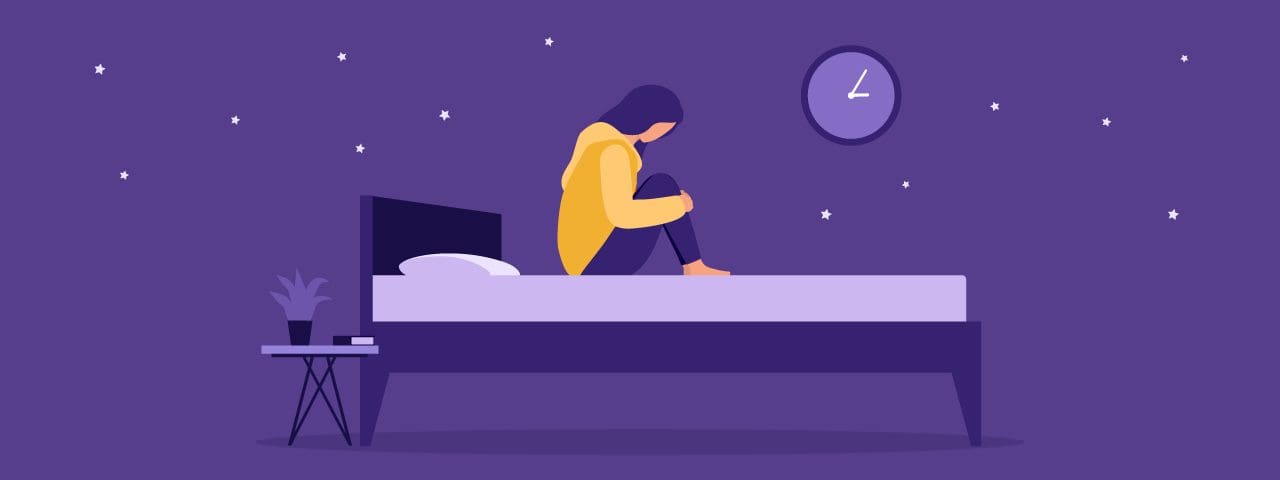
Cannabis may help people with insomnia fall asleep faster, stay asleep longer, and wake feeling more rested — primarily through the effects of THC, CBD, and CBN on the body’s endocannabinoid system (ECS) and its role in regulating the sleep-wake cycle. Insomnia affects an estimated 30% of adults in the US, and for many, conventional treatments — prescription sleep aids, antihistamines, melatonin — provide only partial or short-term relief. Medical cannabis offers a complementary or alternative approach that growing numbers of patients and clinicians are exploring.
How cannabis works for insomnia
Sleep is governed by two overlapping biological processes: the circadian rhythm (a 24-hour internal clock driven by light exposure) and sleep pressure (the buildup of adenosine in the brain that makes you feel tired). The endocannabinoid system is woven through both — CB1 receptors are concentrated in the hypothalamus, basal ganglia, and brainstem, all areas that regulate sleep onset, depth, and cycling between sleep stages.
When the ECS is disrupted — by stress, chronic pain, trauma, or other conditions — the result is often insomnia. Phytocannabinoids from cannabis interact with the same CB1 and CB2 receptors as the body’s own endocannabinoids (anandamide and 2-AG), helping to restore balance to a dysregulated sleep system.
What THC does for sleep
Tetrahydrocannabinol (THC) binds directly to CB1 receptors and has dose-dependent effects on sleep architecture:
- Reduces sleep latency: THC has been shown to shorten the time it takes to fall asleep, making it particularly useful for sleep-onset insomnia.
- Increases slow-wave (deep) sleep: THC extends time in stage N3, the most physically restorative sleep phase, associated with cellular repair, immune function, and memory consolidation.
- Suppresses REM sleep: THC reduces time spent in REM (rapid eye movement) sleep. This can reduce nightmares in PTSD patients, but with long-term nightly use may affect dream-based emotional processing.
- Tolerance and rebound: Chronic high-dose use leads to THC tolerance. Stopping abruptly after prolonged use can trigger REM rebound — a period of intensified dreaming that temporarily disrupts sleep.
For most patients, low-to-moderate THC doses (2.5–10 mg) produce the best sleep outcomes. High doses (20 mg+) can paradoxically increase arousal in some users and are more likely to cause next-morning grogginess.[1]
What CBD does for sleep
Cannabidiol (CBD) is non-intoxicating and does not directly sedate. Instead, it improves sleep by targeting the conditions that most commonly cause it:
- Reduces anxiety: CBD interacts with serotonin 5-HT1A receptors and has demonstrated anxiolytic effects in multiple clinical trials, making it effective for anxiety-driven insomnia.
- Lowers cortisol: CBD may suppress cortisol secretion, reducing the state of physiological alertness that keeps people awake at night.
- Addresses pain: For patients whose insomnia is secondary to chronic pain, CBD’s anti-inflammatory and analgesic properties can improve sleep indirectly.
A large case series published in The Permanente Journal (2019) found that 66.7% of patients taking CBD reported improved sleep scores within the first month of treatment, with anxiety improvement occurring in an even greater proportion.[2]
Insomnia is a qualifying condition in many states.
See if you qualify →
- Get approved in minutes
- Same-day appointments available
- Money back guarantee

CBN: the sleep-specific cannabinoid
Cannabinol (CBN) forms naturally as THC ages and oxidises. It is mildly psychoactive and has gained considerable clinical interest as a sleep-targeted cannabinoid. While robust human trials are still limited, early evidence and extensive patient experience suggest CBN may have sedative properties — particularly when combined with THC. Many sleep-focused cannabis products now feature a THC:CBN ratio specifically formulated for nighttime use.
Sleep-supporting terpenes and the entourage effect
Terpenes are aromatic compounds that interact synergistically with cannabinoids to shape the overall effect of a cannabis product — often called the ‘entourage effect’. The terpenes most relevant to insomnia include:
| Terpene | Role in sleep / insomnia |
|---|---|
| Myrcene | The most abundant cannabis terpene; sedative and muscle-relaxant. Dominant in indica strains and associated with heavy, drowsy effects. |
| Linalool | Floral terpene also found in lavender. Well-documented calming and anxiolytic effects; particularly useful for anxiety-driven insomnia. |
| Terpinolene | Mildly sedating; associated with relaxation in indica and some hybrid cultivars. |
| Beta-caryophyllene | Acts as a CB2 agonist; anti-anxiety and anti-inflammatory. Helpful for patients whose insomnia is driven by pain or stress. |
Tip: When choosing a cannabis product for sleep, ask your dispensary for the Certificate of Analysis (COA) showing the terpene profile alongside cannabinoid percentages — this gives a much more complete picture of expected effects than strain names alone.
Choosing the right product, ratio, and dose
The most effective cannabis approach for insomnia depends on the type of insomnia you have — trouble falling asleep, staying asleep, or both — as well as your tolerance, other medications, and lifestyle. The following guidance reflects common clinical practice.
For anxiety-driven or stress-related insomnia
Start with a high-CBD, low-THC product (ratio of 10:1 or higher). CBD calms the nervous system without significant psychoactive effects, making it well-suited for daytime anxiety management that prevents winding down at night. Look for products containing linalool or beta-caryophyllene for additional anxiolytic effect.
For difficulty falling asleep (sleep-onset insomnia)
A balanced 1:1 THC:CBD product or a low-dose THC tincture taken 30–45 minutes before bed combines THC’s sleep-inducing effects with CBD’s anxiety modulation. Vaporized cannabis is an option for rapid onset on nights when sleep feels impossible, though duration is shorter (2–3 hours).
For waking during the night (sleep-maintenance insomnia)
Edibles or capsules are better suited here because they have a longer duration of action (6–8 hours). A THC:CBN formulation in edible form, taken 60–90 minutes before bed, is a popular choice for patients who fall asleep easily but wake in the early hours. Allow enough time for digestion before expecting onset.
Delivery methods and onset times
| Method | Onset / Duration / Notes |
|---|---|
| Sublingual (tincture/oil) | 15–45 min onset · 4–6 hrs · Good for sleep-onset insomnia; allows precise dose titration |
| Oral (edibles, capsules) | 45–120 min onset · 6–8 hrs · Best for sleep maintenance; take 60–90 min before bed |
| Vaporised flower/concentrate | 5–15 min onset · 2–3 hrs · Fastest relief; useful for nights when onset is urgently needed |
| Topical (cream, balm) | 20–45 min local onset · No systemic effects · Useful when insomnia is driven by localised pain |
Dosing guidance
Cannabis dosing for insomnia is highly individual. General clinical practice recommends:
- Start low, go slow: begin with 2.5–5 mg THC and/or 5–10 mg CBD per dose
- Increase by 2.5 mg increments every 3–5 nights based on response
- Most patients find their therapeutic window between 5–15 mg THC for sleep; higher doses increase the risk of morning grogginess and tolerance
- Keep a sleep log to track dose, product type, sleep quality, and next-day functioning
- Work with a medical cannabis physician for ongoing dose titration, especially if you take other medications
⚠ Important: drug interactions
Cannabis — particularly CBD — is metabolised by the cytochrome P450 liver enzyme system and can interact with several medications commonly prescribed for insomnia and anxiety, including benzodiazepines, Z-drugs (zolpidem, eszopiclone), antidepressants, and antihistamines. Combining cannabis with CNS depressants can amplify sedative effects. Always disclose all medications to your physician and pharmacist before adding cannabis to your regimen.
Can I get a medical marijuana card for insomnia?
Insomnia is a qualifying condition for a medical cannabis card in some states, and in many others patients can qualify via closely related conditions. Eligibility is determined state by state, and the qualifying condition list is updated regularly as cannabis programs mature.
| State | Insomnia / sleep disorder listed? | Common alternative qualifying pathways |
|---|---|---|
| Alabama | No | Chronic pain, PTSD |
| Alaska | Physician discretion | Any debilitating condition at physician discretion; PTSD, chronic pain |
| Arizona | No | PTSD, anxiety, chronic pain |
| Arkansas | Physician discretion | PTSD, anxiety, chronic pain |
| California | Physician discretion | Any condition a physician believes will benefit from cannabis; PTSD, anxiety, chronic pain |
| Colorado | No | Sleep apnea (listed), PTSD, chronic pain |
| Connecticut | No | PTSD, anxiety, chronic pain |
| Delaware | No | PTSD, chronic pain |
| Florida | Physician discretion | Anxiety, PTSD, chronic pain |
| Hawaii | No | PTSD, chronic pain |
| Illinois | No | PTSD, anxiety, chronic pain |
| Louisiana | No | PTSD, chronic pain |
| Maine | Physician discretion | Any condition the physician certifies; PTSD, anxiety, chronic pain |
| Maryland | Physician discretion | Any chronic or debilitating condition; physician determines eligibility |
| Massachusetts | Physician discretion | Any condition causing significant debilitation; PTSD, chronic pain |
| Michigan | No | PTSD, anxiety, chronic pain |
| Minnesota | No | Sleep apnea (listed), PTSD, anxiety, chronic pain |
| Mississippi | No | PTSD, chronic pain |
| Missouri | Physician discretion | PTSD, anxiety, chronic pain, sleep apnea |
| Montana | No | PTSD, chronic pain |
| Nevada | No | PTSD, anxiety, chronic pain |
| New Hampshire | No | PTSD, chronic pain |
| New Jersey | No | Sleep apnea (listed), PTSD, anxiety, chronic pain |
| New Mexico | Physician discretion | PTSD, anxiety, chronic pain |
| New York | Physician discretion | Any condition at physician discretion; PTSD, anxiety, chronic pain |
| North Dakota | No | PTSD, anxiety, chronic pain |
| Ohio | No | PTSD, anxiety, chronic pain |
| Oklahoma | Physician discretion | Broad qualifying criteria; effectively any condition physician certifies |
| Oregon | Physician discretion | PTSD, chronic pain |
| Pennsylvania | No | Anxiety disorders, PTSD, chronic pain |
| Rhode Island | No | PTSD, chronic pain |
| South Dakota | No | Chronic pain, PTSD |
| Utah | No | PTSD, chronic pain |
| Vermont | Physician discretion | Any condition the physician certifies; PTSD, anxiety, chronic pain |
| Virginia | Physician discretion | PTSD, anxiety, chronic pain |
| Washington | No | PTSD, anxiety, chronic pain |
| Washington D.C. | Physician discretion | No formal qualifying list; any condition at physician discretion |
| West Virginia | Yes — insomnia explicitly listed | — |
Note: Cannabis laws change frequently. Always verify current state regulations with a licensed medical cannabis physician. See Leafwell’s state-by-state qualifying conditions guide →
Leafwell’s licensed physicians can evaluate your specific sleep condition and identify whether you qualify directly or via a related condition — typically in a same-day telehealth appointment. Book your appointment →
What is insomnia?
Insomnia is the most prevalent sleep disorder in the United States, affecting an estimated 30% of adults short-term and 10% chronically. It is defined as persistent difficulty initiating or maintaining sleep, or experiencing non-restorative sleep despite adequate time and opportunity — resulting in meaningful daytime impairment. Insomnia is not just a nighttime problem: its downstream consequences include impaired cognitive function, reduced immune activity, mood disturbance, and elevated risk of cardiovascular disease and depression.
Types of insomnia
- Sleep-onset insomnia: Difficulty falling asleep at the beginning of the night. Commonly driven by anxiety, racing thoughts, blue light exposure, or stimulant use.
- Sleep-maintenance insomnia: Waking during the night and struggling to return to sleep. Often linked to chronic pain, hormonal changes, or sleep apnea.
- Early-morning insomnia: Waking too early and being unable to fall back asleep. Strongly associated with depression.
- Acute insomnia: Short-term, typically triggered by a specific stressor (illness, grief, work pressure). Resolves within days to weeks.
- Chronic insomnia: Occurs at least three nights per week for three or more months. Requires formal evaluation and targeted treatment.
Common causes and contributing factors
- Anxiety and panic disorders
- Depression
- PTSD — nightmares and hyperarousal are among the most common causes of chronic insomnia
- Chronic pain (fibromyalgia, arthritis, back pain, neuropathy)
- Hormonal changes (menopause, thyroid disorders)
- Stimulant and substance use (caffeine, alcohol, nicotine)
- Irregular sleep schedules and shift work
- Medications (SSRIs, beta-blockers, corticosteroids, decongestants)
- Neurological conditions (Parkinson’s disease, Alzheimer’s disease)
- Sleep apnea and restless legs syndrome
Conventional treatments
Standard medical approaches to insomnia include:
- Cognitive Behavioral Therapy for Insomnia (CBT-I) — the first-line, evidence-based treatment. Addresses the thoughts and behaviours that perpetuate insomnia. Highly effective but requires sustained effort and access to a trained therapist.
- Prescription medications — benzodiazepines (temazepam), Z-drugs (zolpidem/Ambien, eszopiclone/Lunesta), orexin antagonists (suvorexant/Belsomra), and low-dose doxepin. Carry risks of dependency, tolerance, and residual grogginess.
- Over-the-counter sleep aids — antihistamines (diphenhydramine/Benadryl) provide short-term sedation but rapidly lose efficacy and impair cognitive function with repeated use.
- Melatonin — effective for circadian rhythm disruption (jet lag, shift work) but limited evidence for primary insomnia.
For patients who have not found adequate relief through conventional treatments, or who want to avoid the dependency and tolerance risks of prescription sleep medications, medical cannabis is an increasingly recognised alternative — particularly when insomnia is secondary to anxiety, pain, or PTSD.
Get your medical marijuana card
Connect with a licensed physician online in minutes.

Larger purchase limits 
Access to higher potency strains 
Save up to 40% on product taxes 
Enhanced legal protection